Thursday, 25 July 2013

Some days are just great.....

If its not the weather.... then its the price.... if its not the price..... then its the bureaucracy, administration and politics of the job.
I felt a bit like that this morning, but this afternoon ...... I took a trip around the farm with Loddington's keeper James Watchorn and Richard Barnes from Kings.

My main aim on the farm is to produce food and I was pleasantly surprised by the spring rape and oats. I had still have major concerns over black grass in all the crops, but the size of the wheat ears fills me with hope and the more the sun shines the better this late harvest looks.

However, the improvement in my mood was the amount of wildlife in some of the non crop habitats. Much of our work at Loddington concentrate on wildlife, game and environmental responsibilities and this afternoon we saw it in spades.  Our select group spent a couple of hours visiting some of the environmental habitats away from our normal visitors route. We discussed our next set of management prescriptions for grass margins, wild flower mixes and the wildlife seed plots. The sunshine certainly helped with a wildlife explosion.

The landscape was full of bees, butterflies, pollinators, songbirds and pheasants. 
With all the discussions on CAP Greening that has been in the media recently, I wish I could have bottled up the farms biodiversity and let it loose amongst the PowerPoint presentations, flipcharts and words of wisdom. 

By heck it was an exhilarating walk around the farm... here are a few photos that try and do it justice.

 
James and Richard survey some maize, chicory and sweet clover

Chicory edge to the maize

Scores of tortoiseshell butterflies feeding on some strategically placed thistles !!

Bees everywhere

Some of these plots have ended up with fodder radish, birdsfoot trefoil and wheat

Kale, fodder radish and mustard

Pollen and nectar margins were awash with pollinators

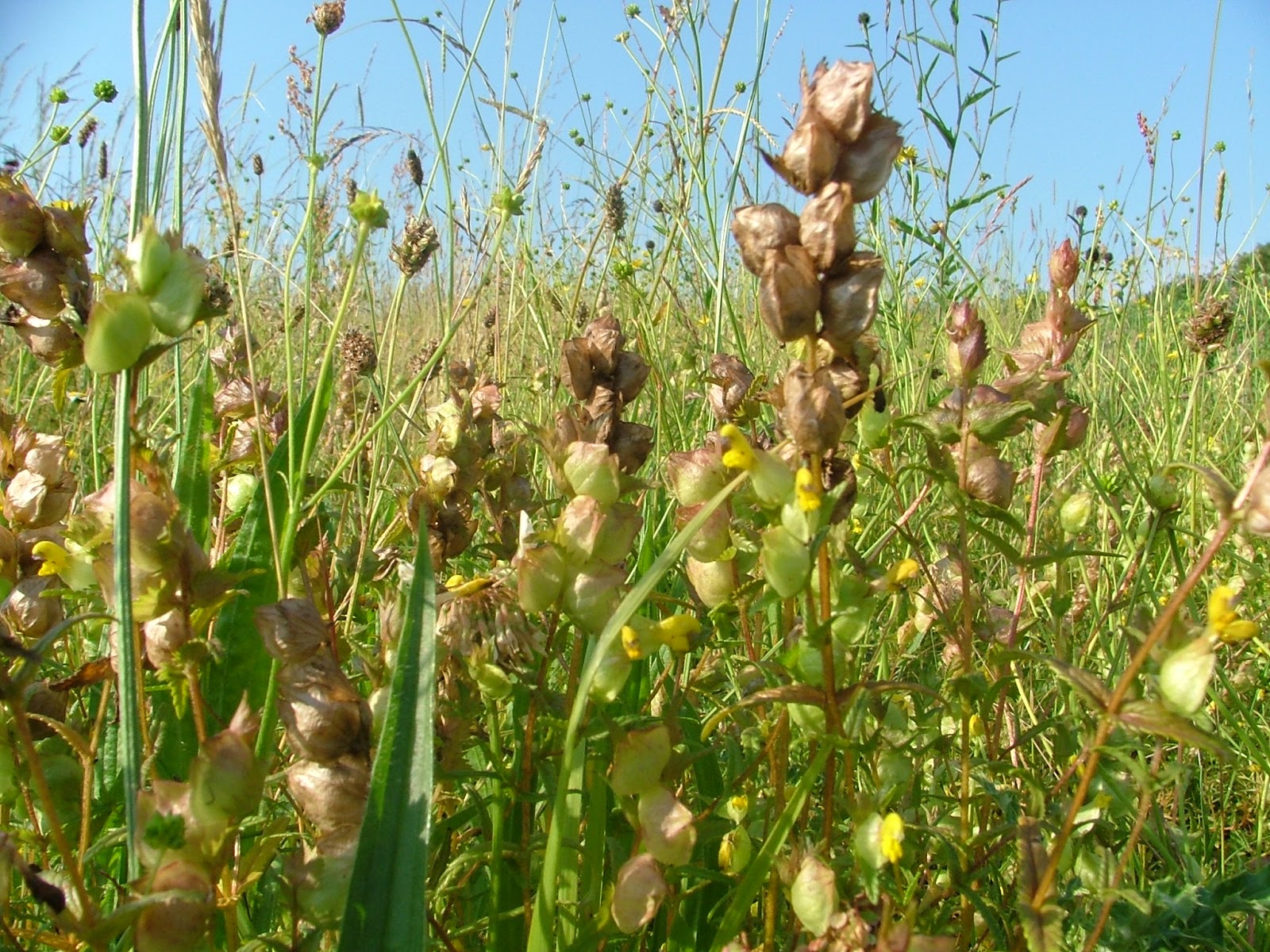
We even spotted some yellow rattle.

Wednesday, 17 July 2013

Lincs FM Farming Programme visits Allerton Project


Phil Jarvis hosted Sally Elkington from Lincs FM, discussing the work at the GWCT Allerton Project on food and farming, the environment and community involvement.

The Farming  Programme was broadcast on Sunday 14th July - Click here to listen

Sunday, 30 June 2013

The Challeges of 2013 Harvest Crops

Head of Farming, Phil Jarvis, takes a look at the Allerton Project's arable challenges in 2012/13 and some of the possible solutions.

Whilst the cold and wet weather has played a major part in this season's challenges, dry spells have also caused soil and crop problems.

We need to develop a more resilient farming system and in particular look at improving soil health. This season we have had problems with crop failure, compacted soils, blackgrass and charlock. An additional concern is the looming late harvest of spring oats, spring beans and spring oilseed rape. This was compounded by a dry spell from mid April to mid May which slowed crop emergence.

We will have to quite pragmatic about spring crops that will yield poorly and hinder our 2014 crops. Will they reach fruition, be whole cropped or act as a cover crop? The growing amount of 'sprayed off' fields shows a number of growers have already decided to cut their losses and make a timely start to next seasons cultivations.


Spring rape has replaced failed winter rape, it has finally come
into flower but Charlock waits worryingly in the wings.
Compaction is never far away in modern arable farming. Unsuitable conditions for autumn field work and incessant rain has left soils slumped, compacted and as such these soils won't provide an ideal medium for root development.                                          
Compaction is a challenge that continually needs addressing
We will need some help from the weather to help the natural cracking process on our heavy soils. Uneven seedbeds and tramlines will need some mechanical operations to try and restructure soils.
Our transition to direct drilling and fewer cultivation passes will be key to our future soil health. The inclusion of more organic matter and straw to encourage earthworms will also help our soils to breathe again. Our next combine will almost certainly have tracks rather than wheels to try and reduce ground pressure.

We can't get away from the fact that the weather has thwarted our blackgrass control strategy this year. Some fields failed to have a stale seed bed, no pre-emergence sprays and no Avadex. We tried to control strong blackgrass plants with Atlantis in weather conditions that were too cold. Our stale seedbed in spring beans, only partially materialised and blackgrass now emerges amongst the pulses.


Blackgrass at Loddington has become a serious challenge !

It is imperative that a combination of straw raking and rolling immediately after combining start the process of germinating blackgrass seeds.


Rotation
We are considering returning to winter beans and spring oats as a different approach to blackgrass control. Introducing some red clover/grass leys into the rotation has benefits for fertility, weed control and soil structure and will allow us to research a number of economic and environmental areas. 

                                          
                                                           Current rotation ww/wosr/ww/spr beans or w.oats


The introduction of red clover will improve our soil structure, soil fertility and help reduce the blackgrass burden

Thursday, 13 June 2013

Does new technology always mark progress?

We have embraced a number of new technolgies on the farm over recent years from yield mapping, GPS autosteer, scanning crops to apply nitrogen and automatic boom shut off on the sprayer. This week we are fitting a 30KW solar panel system on the roof of our grain store and all seems well with this technology.

New solar panels on grain store roof

However, there are some days when 'supposed' technology improvements have driven me round the bend and one day last week summed it up perfectly.

EON Smart meter
The day started with the chirpy 'EON smart meter installer', who turned up on the dot of eight o'clock to install a smart meter in my house. It was free and I was interested in how much each electrical item was costing me to run. After ten minutes he re-emerged and said sorry. The phone signal was so poor the smart meter wouln't work. He left with slightly less spring in his step.

 
Rural broadband
Our broadband then decided to drop out and make it impossile to use web mail or back up our cropping programme on line, or play video clips of Farmer Jake's latest machinery outings on You Tube!

Mobile phone
I then decided I would venture out onto the farm to prepare for Open Farm Sunday. My HTC Desire C mobile phone (Orange network) would control the Loddington empire with consumate ease, or so I thought. A common theme, no signal in farmhouse kitchen, office and farmyard. I looked longingly at the old Nokia brick on top of the sideboard cup. I tried call divert, but even that needed the signal.

GPS spraying
So I climbed on board the sprayer and continued our flag leaf fungicide programme, when half way round the headland the ...... satelitte dropped out. It was only a momentary blip, but by now I was sure there was a conspiracy theory against me.

Digital tv
The remainder of the day passed reasonably uneventful and as daylight faded I headed back home. I thought I'd catch up with the news and turned the TV on only to find a pixelated screen on every. channel. This seems to happen more regularly than the analogue wavy lines.

I turned in for the night exasperated....... the next day was fine....... but improving my rural broadband and phone signal are now high on my agenda. Not all new technolgy is great in rural Leicestershire!


Sunday, 9 June 2013

2013 Open Farm Sunday in Pictures

Thank you to all our visitors, participants and helpers on 9th June 2013
Thanks to Kathyrn Mitchell from LEAF for taking time out to visit us.
See you all on the 8th June 2014


Getting ready
 
New landscaped entrance

Filling the woodchip hopper, keep building warm... chilly brrr 10 degrees at 6.30am

Tractor Ted first to arrive.

Tractor Ted's mates turn up


Childrens area, plant sale, Eyebrook bird food,
 NFU and Katy Machin's farm produce on sale.
Craft fair inside
Pebbles the Saddleback
Mr Rusty - on a day visit from Shetland

Visitors begin to arrive. 12 degrees and temperature rising. 

Suffolks, Charolais and Easy Care; rams ewes and lambs.
14 degrees farmer Phil starting to smile

Information and health and safety!!!!


Alastair Leake on guided farm walk, one of 9 walks conducted on the day.
Explaining the role of food production within the rural landscape.
Below Alastair shows the Guinness record holder 'big bird' feeder


 Sun well out all afternoon, 18 degrees and sunburnt ears!!!

The remnants of an Open Farm Sunday Organiser's kit.


Thursday, 30 May 2013

Meet Farmer Phil on Open Farm Sunday

 Farmer Phil looks forward to meeting visitors to Open Farm Sunday on June 9th 2013
GWCT Allerton Project
Loddington
Leics
LE7 9XE


Wednesday, 29 May 2013

Parkland tree comes crashing down !

It is always a sad day when a tree which is over a 100 years old is bought to the ground by inclement weather. This horse chestnut fell victim to last Friday's wind and rain, this is the second major limb to fall from this tree in the last 5 years.


The decision now is to see if the rest is worth saving or we let other recently planted parkland trees flourish in the vacated space. The beech, oak and ash trees planted 10 years ago are now a a parkland feature in their own right. The 50 apple trees planted last year will also help ease the pain !