This review of #NFU15 (the trending Twitter hashtag!!) may appear light hearted and extremely simplistic.... it's meant to. In a world of information proliferation, this is what simplification looks like. The NFU will produce a comprehensive summary and it will probably be out before this blog. So here we go with the top ten conference countdown.
1. John Humphrys questioning of the politicians (and most of the audience) was skilfully handled by the consummate broadcaster, mixing humour, astute comment and observation and covered TB, Food, Europe and the plight of the milk sector.
2 The big hitters came early in the programme with Elisabeth Truss telling the farmers that she was 'keen' and 'determined' to help the industry. A more resilient industry with simpler EU regulations to help producers innovate were key messages. One hopes that the election doesn't upset that applecart. Phil Hogan was very impressive, reminding conference of some of the environmental and moral aims of EU policy and recognising that some simplification and changes were needed.
3. Justin Urquhart-Stewart, by far the most amusing presentation of the conference... full of wit and wisdom. I have ordered my red braces and tie!!!
4. Joanne Denney-Finch delivered the best idea of the conference 'a farmers market within a supermarket'.... nice. Joanne's delivery style is very good and it is a close race between her and Mark Grimshaw (RPA) as to who would be the coolest under pressure.
5 The Conference organisation continues to defy the odds in moving a 1000 rural stakeholders around the conference halls. From the opening video (no personal interest.. but I appear on a CFE clip after about 35 seconds) to the closing AGM there are very little stones left unturned. The Twitter feeds, e-mail summary, website stories and publications were a triumph for the conference team.
6. The dairy and milk sector quite rightly had much more exposure at Conference this year. The problems in global supply, Russia and a proper functioning markets are a warning for all the commodity sectors. (I should probably refer to them as food sectors and then drill down into brands to get some unique selling points, product differentiation and open up a whole new market place!!)
7. The worrying thing about science is science is a wonderful thing, their tops are made out of rubber and their bottoms are made out of springs. For every issue you will find a number of scientists who will contradict each other. So when we call for everything to be 'science led' or 'science based'.... whose science are we talking about, nobody seems to @~**dy agree. Neonics and TB being two classic areas.We've got a Grocery Code Adjudicator we need a Code of Science Adjudicator... I'm sure I read somewhere we just got rid of someone who could of done that job, the EU Chief Scientific Adviser!!! Huw Irranca-Davies (Labour) insinuated that even if the science of the cull was favourable... it wasn't the right sort of science for his party.
8. Sir Henry Plumb was on extremely good form and Guy Smith was drew the audience to the fact that it was the 61st consecutive conference he had attended.
9. Mark Grimshaw probably just pips Joanne Denney-Finch as the coolest under fire, especially in light of the BPS payment system roll out. Mark has a very reassuring manner. However, I am just checking whether my grandparents ever worked at Bletchley Park (so I can crack some of the evolving system) and I might go for a week's 'work experience' at Ordinance Survey.
10. Finally an East Midlands highlight, the okey cokey played by Mark Leggott and John Humphrys over questions. Mark asked a question on food self sufficiency in the UK and when asked gave the answer as well. Bravo Mark... you might just get third place in the coolness under fire category. As for the up....down....up of the second non question....priceless.
The conference is informative, challenging and extremely well run and it certainly gives you the big picture on how UK agriculture is faring. As for catching up with friends, farmers, colleagues and business contacts, its invaluable.
Thursday, 26 February 2015


Sunday, 25 January 2015
The Blackgrass Blues
If ever a set of photos showed why blackgrass can be a problem associated with soil type and drainage then read on (as well as rotation, compaction, etc. etc.) These pictures were taken this afternoon as I went for a walk around our oilseed rape.
There is pigeon, slug and phoma to contend with as well, but here we go....
There is pigeon, slug and phoma to contend with as well, but here we go....
 |
| On the left Denchworth clay and on the right the soil changes to lighter Banbury series ironstone. |
 |
| The view from the same spot looking uphill into the freer draining Banbury series |
 |
| and here thinner establishment on the heavier Denchworth, more blackgrass and targeted by pigeons!! |
Thursday, 4 December 2014
Seminar on Agroecology and Sustainable Intensification - 14 January 2015, London
Wednesday 14 January 2015
Trevelyan Hall, St Matthew's Conference Centre, St Matthew's House
20 Great Peter Street
Westminster
London SW1P 2BU
20 Great Peter Street
Westminster
London SW1P 2BU
Free Admission
Dear Sir/Madam
On behalf of the
inter-agency Land Use Policy Group (LUPG), I’d like to invite you to join us at
a one-day seminar designed to explore the potential for agro-ecological
approaches to contribute to the sustainable intensification of agriculture.
In parallel with the promotion
of sustainable intensification, there is a growing interest in agro-ecology, as
exemplified by a number of reports[1] [2]. Following the previous work we
commissioned on sustainable intensification, LUPG has now asked the Organic
Research Centre (ORC) to examine the relationships between the
sustainable intensification and agro-ecology concepts via a desk-based study.
This project is intended to explore the extent to which the two concepts
are compatible as well as assessing whether agro-ecological systems and
strategies are a valid and/or necessary path to sustainable intensification in
both the UK and European contexts.
We would be delighted to see you
at ORC’s forthcoming presentation of their findings at the St Matthew’s Conference Centre in London on Wednesday 14
January 2015. More information,
including a location map is available at: http://www.stmwvenue.co.uk/
We are planning for
the event to start at 10.30 am and finish at around 15.30 in the afternoon. We
are also intending for all of the feedback received to be taken into
account in the preparation of the final report.
The agenda is likely to cover the following themes and will include a panel
discussion (including Dr Tara Garnett of the Food Climate Research Network,
Prof Tim Benton from Leeds University, Prof Charles Godfray from Oxford
University, Stuart Knight from NIAB, and
Phil Jarvis from the Allerton Project (Game & Wildlife Conservation Trust))
:
·
A review of agro-ecological systems and
strategies;
·
Assessing the relative performance of agro-ecological
systems/strategies against more conventional approaches to sustainable
intensification;
·
Establishing whether and to what extent
agro-ecological systems/strategies can contribute to sustainable
intensification;
·
A discussion on barriers and opportunities to
the uptake of agro-ecological systems/strategies.
In order that we can cater for your dietary needs, please let us know
about any special requirements as soon as possible.
All responses should be sent to kelly.matheson@snh.gov.uk and please
feel free to pass this invitation onto a colleague if you are unable to join us
on the day.
The final programme will be circulated closer to the date - and we look
forward to welcoming you on 14 January 2015.
Yours sincerely
Cécile Smith
Scottish Natural Heritage on behalf of the Land Use Policy Group
[1] The Centre for
Agroecology and Food Security (2013) Mainstreaming Agroecology:
Implications for Global Food and Farming Systems, Discussion Paper.
Coventry University/Garden Organic
http://www.coventry.ac.uk/Global/05%20Research%20section%20assets/Research/CAFS/Publication,%20Journal%20Articles/MainstreamingAgroecology_WEB.pdf
[2] Olivier
de Schutter (2011) Agroecology and the Right to Food, Report by the Special
Rapporteur on the Right to Food, UN.
http://www.srfood.org/images/stories/pdf/officialreports/20110308_a-hrc-16-49_agroecology_en.pdf
Tuesday, 2 December 2014
Winter's Here
Another Loddington photo snapshot
 |
| Late sown wheat just poking through in the late autumn sunshine |
 |
| Wheat and volunteer beans |
 |
| As the wet soggy weather sets in... |
 |
| on a dreary autumn day |
 |
| the winter beans are peaking through. |
 |
| We're sharing knowledge with Kelloggs farmers |
 |
| and everyone's interested in cover crops |
 |
| It seems a while ago we had showery combining weather |
 |
| but a fantastic July |
 |
| and my second favourite picture of the year.. hay making |
 |
| My favourite picture.. Longwools at Loddington |
 |
| Rufus on look out duty.. |
 |
| and yesterday home time for some of the Longwools |
Wednesday, 29 October 2014
Peter Thompson replies to the 'Elephant in the room'
This is taken from todays guest blogger Peter Thompson
The Elephant in the room - world population growth.

The Elephant in the room - world population growth.
Fellow GWCT colleague “Farmer Phil” Jarvis wrote an interesting piece on the difficulties that the agricultural industry will face, if in the future we continue to loose active agro-chemical ingredients and don’t replace them with new technology. You can read what he had to say on: http://loddingtonestate.blogspot.co.uk/
Phil finished his article by saying “The elephant in the room - 'population growth'... who would like to continue that debate?”
Well Phil, you know me - so here are a few thoughts on the subject!
At the moment there are more than 7 billion people on the planet, all of whom need feeding and we are already falling short as more than 800 million people are hungry. According to the United Nations, we will need 60% more food than we currently produce to feed the world’s projected population by 2050.
Listen, I’m certainly no expert on this, but that sounds all a bit scary to me. So I have turned to two people who are experts in this field – namely Malcolm Potts, Bixby professor at the School of Public Health at the University of California, Berkeley and Martha Campbell, who is president of Venture Strategies for Health and Development and a lecturer at the University of California, Berkeley.
This is what they have to say on the matter.
“The United Nations Population Division has made a radical shift in its population predictions. Previously, the organization had estimated that the number of people living on the planet would reach around 9 billion by 2050 — and then level off. Now everything has changed: Rather than levelling off, the population size will continue to grow, reaching 10 billion or more at century's end. Rapid population growth inhibits many of the factors of development from proceeding apace — including education and health.
In all our research, we have not found any country, with the exception of a few oil-rich states, that has developed or extricated itself from poverty while maintaining high average family size. Countries with high birth rates tend to find it difficult or impossible to expand their education systems or their health systems adequately to keep up with the need. However, at present many women across the globe, especially poor women, do not have access to family planning.
This matters beyond any one country or region. If we want to live in an ecologically sustainable world, we'll have to meet the needs of the present without compromising the natural resources and services our children and grandchildren will need. Given time, and a great deal of scientific ingenuity, we might still be able to reduce our consumption and pull a world of 8 billion people back to a biologically sustainable economy by the end of the century. But a world of 10 billion could do irreversible damage to the planet. It's just too many people.
We've now been warned. If measures are taken now, we could still keep the 2050 world population at around 8 billion. We have to ensure that the population can be slowed by purely voluntary means and within a human rights framework. We need to galvanize the political will to make it happen and invest now so that family planning options are universally available. Fail to do so, and we may give birth to a new, difficult era of poverty instead”.
So, it appears blatantly obvious to me anyway, that if all life, including humans, is to have any sort of future on this planet, then we need to act quickly to introduce widespread contraception across the world, making sure that the wealthier nations help to fund the poorer countries so as to make this possible.
So Phil, as requested I have continued the debate. But actually what is needed now is action, not more words.
Tuesday, 21 October 2014
'Plant Protection Products' Debate
The report published by Andersons today, 'The Effect of the Loss of Plant Protection Products on UK Agriculture and Horticulture and the Wider Economy' is a thorough study exploring some of the issues facing farmers and growers. The report was commissioned by the National Farmers Union, Crop Protection Association and the Agricultural Industries Confederation. It illustrates a number of conundrums, dilemmas and challenges faced by UK and European agriculture.
The issue
The changing regulation of plant protection products from a risk based system to hazard based, reduces the chemistry available to growers. It would appear that a number of other factors are influencing the approvals and renewal process and sound science has less of an impact.
Argument
Plant protection products, in Europe, are already among the most closely regulated in the world and have a part to play in modern food production.
Some commentators have stated that such an 'evolving regulation system' offers a high level of protection for human and animal health. It is the 'intensive use of pesticides that is undermining our ecosystems' and support for this report is 'scaremongering' and 'crying wolf'.
The challenges
We need to pay more attention to the planets growing population - as a species we continually ignore unsustainable population growth and the pressure it places on the world's limited resources. This human expansion, increases the need for more efficient food production. This is also an issue in England, as shown below.

We recognise the need to develop food production systems that impact less on our soils, water and air whilst still producing sufficient food. Such systems are advocated by LEAF's Integrated Farm Management and our own 'Allerton Approach'. Remember growing food under any system will impact on the environment. Our own government also have a responsibility to keep a productive and competitive UK agricultural sector, growing food from our fields for our consumers. Increasing imported food also has an environmental footprint.

So let's advocate risk based approach to plant protection product regulation, based on sound science. Encourage technology and investment in our agricultural sector. We also need to make sure the increase in British food production and productivity is at the centre of UK policy and that view is represented within Europe.
Recent trends would suggest a yield plateau, the reasons are numerous and a subject for discussion on their own.

The Allerton Project will continue to embrace both cultural, organic, science and technology in pursuit of a sustainable crop production systems. As vice chairman of our NFU County Group, I'm proud to support the efforts of UK farmers to produce safe and affordable food.
The elephant in the room of 'population growth',... who would like to continue that debate?
The issue
The changing regulation of plant protection products from a risk based system to hazard based, reduces the chemistry available to growers. It would appear that a number of other factors are influencing the approvals and renewal process and sound science has less of an impact.
 |
| Reduction of active ingredients over since 2000 |
Argument
Plant protection products, in Europe, are already among the most closely regulated in the world and have a part to play in modern food production.
- With more restrictions on the horizon many will say the registration and renewal process that governs plant protection products is flawed. This process says most sprays are hazardous and should be restricted.
- Less plant protection will be available to growers and this will have a negative impact on efficient food production.
- Agricultural investment and innovation will be stifled in over regulated European economies driving investment to other parts of the world.
Some commentators have stated that such an 'evolving regulation system' offers a high level of protection for human and animal health. It is the 'intensive use of pesticides that is undermining our ecosystems' and support for this report is 'scaremongering' and 'crying wolf'.
The challenges
We need to pay more attention to the planets growing population - as a species we continually ignore unsustainable population growth and the pressure it places on the world's limited resources. This human expansion, increases the need for more efficient food production. This is also an issue in England, as shown below.
We recognise the need to develop food production systems that impact less on our soils, water and air whilst still producing sufficient food. Such systems are advocated by LEAF's Integrated Farm Management and our own 'Allerton Approach'. Remember growing food under any system will impact on the environment. Our own government also have a responsibility to keep a productive and competitive UK agricultural sector, growing food from our fields for our consumers. Increasing imported food also has an environmental footprint.
Recent trends would suggest a yield plateau, the reasons are numerous and a subject for discussion on their own.
The elephant in the room of 'population growth',... who would like to continue that debate?
Thursday, 16 October 2014
Allerton Supporting CFE
Living and working in the countryside can be challenging, but it can also be very rewarding. Take a look at the Campaign for the Farmed Environment video showing farming in the countryside.
Made by the NFU in conjunction with farmers and some of the team from the Allerton Project.
I challenge you to not start humming!!!
More can information can be found at the NFU website
Made by the NFU in conjunction with farmers and some of the team from the Allerton Project.
I challenge you to not start humming!!!
More can information can be found at the NFU website
 |
| Pollen and Nectar |
 |
| GPS controlled combining |
 |
| Canary grass and clovers |
 |
| Cultivations.. |
 |
| Chicory visited by pollinators |
 |
| Temporary drainage channels with the mole plough |
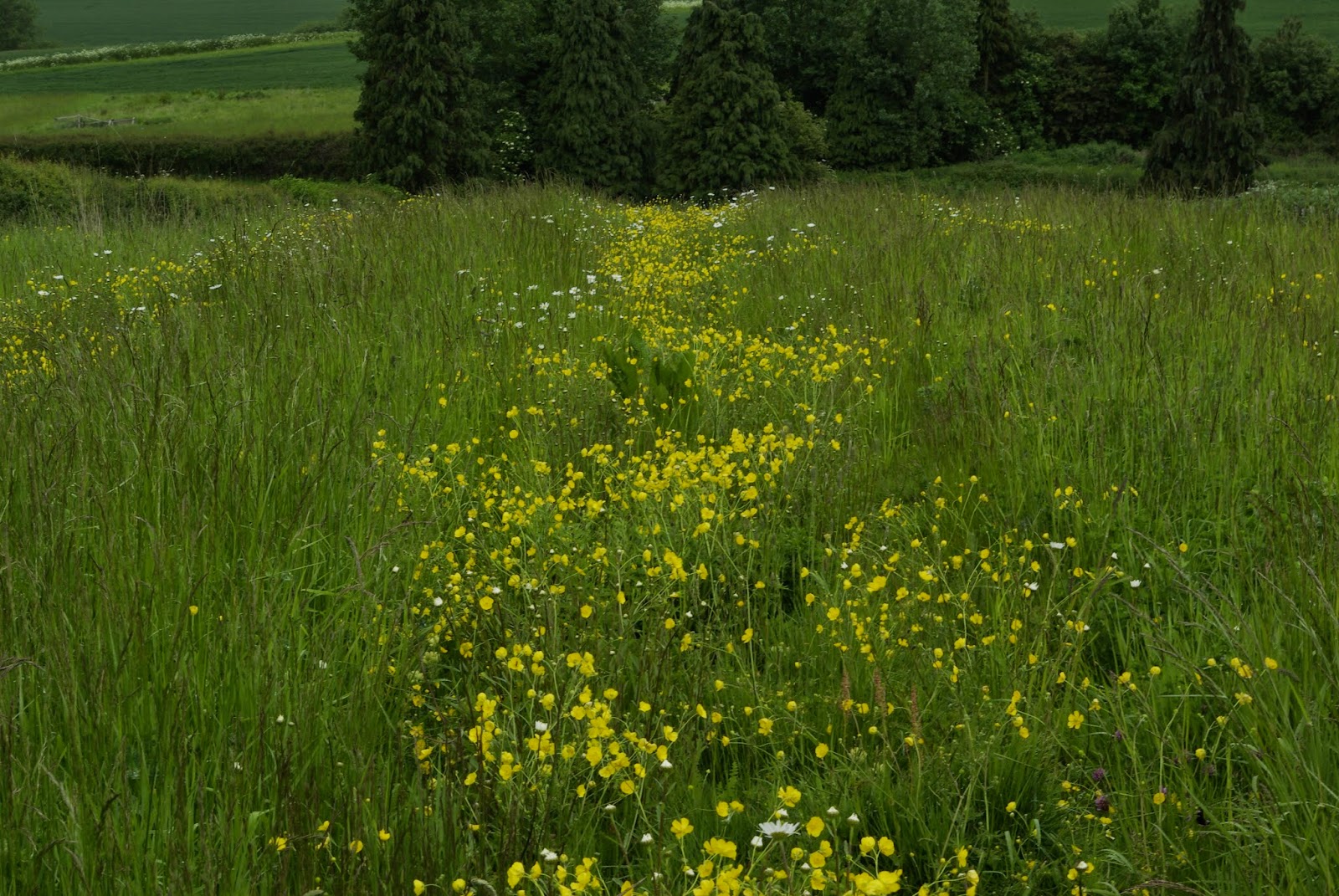 |
| Flower margins |
 |
| GPS direct drilling |
Subscribe to:
Posts (Atom)