Monday, 13 July 2015

Countryfile in Context

It was good to see Countryfile address the issue of soil sustainability on this week's programme. The health of our soil is the most important factor for our business and environmental sustainability.

The time available on the programme meant that not all issues got coverage, however some clear messages were addressed;
  • cover crops to help with structure 
  • the importance of earthworms
  • erosion
  • reduced cultivations
Filming with Tom Heap

It was an interesting few hours of filming with Tom Heap, numerous camera shots, re takes and sound bites. The audience for Countryfile is wide and varied and as such the programme addresses many, sometimes complex issues.  I have to admire the craft that goes into the final edit, mixing library footage for explanation with 'live footage' which brings our farms and countryside to life.

There were many more areas that could have been covered;
  • rotations
  • cultivation timings
  • controlled traffic
  • organic manures
  • soil's nutrient composition
  • mycorrhizal fungi and other beneficial soil flora and fauna

Cover crops can help our soil, if we can get their management and cost right

The GWCT Allerton Project is always looking to develop and demonstrate practical solutions for growers and farmers. It's collaborations with numerous industry partners in the public, private and charitable sectors gives us a good understanding of the issues surrounding profitable farming and environmental responsibility. If we can address both, to create win wins, then farming and environment becomes much more cohesive.

Sunday, 21 June 2015

Meadow Mania

No words are really necessary.... all taken from the same field at Loddington this week


Saturday, 20 June 2015

Digging for victory with healthy soils

Reproduced press release from GWCT


A deep soil pit in a field of Spring Barley enabled Alastair Leake to explain the layers of the soil, the significance of burrowing, feeding and casting of earthworms and their ability to help withstand extreme weather eventsThe United Nations has declared 2015 as the International Year of Soils with the aim of helping to raise awareness of why soils are important for food security and the environment. By its very nature without this essential element we would not be able to grow food, provide wildlife habitats, prevent flooding or have clean water.
Celebrating this theme, the National Farmers Union (NFU) together with the GWCT’s Allerton Project in Leicestershire, held a thought-provoking event with a range of experts explaining the latest research findings on soil research as well as describing how cultivation and innovation is helping farmers lead the way to achieve healthy soils for the benefit of the environment, crop yields and people.

Attended by nearly 50 farmers, NFU members, industry advisers, researchers and policy makers, including representatives from Defra and the Environment Agency, this important event was chaired by Minette Batters, deputy president of the NFU who started by saying “The Year of Soils is a vital opportunity for the NFU to showcase some of the amazing work that farmers are doing.”

Similarly, Phil Jarvis of GWCT started his presentation by stating “Farmers do a lot for soil and the environment and don’t shout loud enough about it.” This view was mirrored by all the expert speakers who presented their current research findings on managing soil which included Dr Alastair Leake from the GWCT Allerton Project, Dr Ron Stobart from NIAB TAG and Ian Matts from Yara. In addition, Richard Bramley, farmer and NFU Environment Forum member, gave a detailed insight into the challenges and benefits of managing his soil sustainably from personal experience on his own farm in Yorkshire.

The audience heard how research and current practice was working to overcome problems such as soil erosion, compaction and flooding by adopting emerging techniques such as strip and min-till, to more established practices such as cover crops, buffer strips and beetle banks .

The discussions which followed focussed on the future challenges facing soil management including what farmers, researchers and policy makers should do to bring agriculture back into the limelight. Dr Alastair Leake from the GWCT’s Allerton Project highlighted how soil management can make farmers resilient to climate change by adding, “Changes to cultivation techniques can help to build a resilient soil, that can withstand more frequent and exceptional weather events such as rainfall and drought. This will be vital as we go forward so that we can continue to farm our food efficiently while caring for the environment.”

Minette Batters, summed up at the end of the event saying "The year of the soils is a vital opportunity for the NFU to showcase some of the amazing work that farmers are doing. Soil is the most important asset of any farm, and it's very clear from the farmers here today that it's their absolute priority to look after it.

“This event at the Allerton Project has shown how food production works in harmony, as well as enhancing the farmed environment. I am therefore delighted that this government has committed to a long term food and farming strategy. This is essential if we are going to have sustainable, resilient farms that can manage climate change whilst continuing to produce food and care for our treasured environment." Mrs Batters, went on to add, "With a UK population of 60 million people, set to rise to 70 million in the next decade, food and farming needed to be at the heart of Government and that the A in Defra should once again stand for agriculture.”

The afternoon session involved a tour of the Allerton Project Farm to see research in action which stimulated much conversation about the differencing soil management practices utilised across the diverse soil types in the UK. Sited amongst the productive fields were examples of machinery – Sumo, Dale and Claydon drills that are used by the Allerton project to direct drill seeds into the untilled land. A deep soil pit in a field of Spring Oats enabled Alastair Leake to explain the layers of the soil, the significance of burrowing, feeding and casting of earthworms and their ability to help withstand extreme weather events

Richard Barnes, from seed suppliers Kings was also on hand to explain work on cover crops and how these are an important part of the mix to ensure soil health. Top of the cover crops with Richard are currently radish, vetch, rye, oats, phacelia and buckwheat. These seed mixes produce a diverse range of soil crops which in-time reduce soil compaction and improve structure.

Concluding the day, Jim Egan from the Allerton Project and co-ordinator of the event said, “There are lots of farmers doing good things and they are learning about new techniques and challenges all the time. But to pull this all together we need practical research and demonstration and we saw that in ample amounts at this event today.”

The NFU and GWCT are grateful for the sponsorship provided by Yara and Kings.

Tuesday, 9 June 2015

Sunshine Sunday

Well what a day Open Farm Sunday was this year, hard to estimate numbers but getting  towards 500 visitors to the Allerton Project in the last few days. It is time for another photo blog, so here goes...


Tent Team

Tents ready....

Sheep ready... although they don't look that bothered about all the fuss..


Combine and tractors ready.... will anybody turn up?


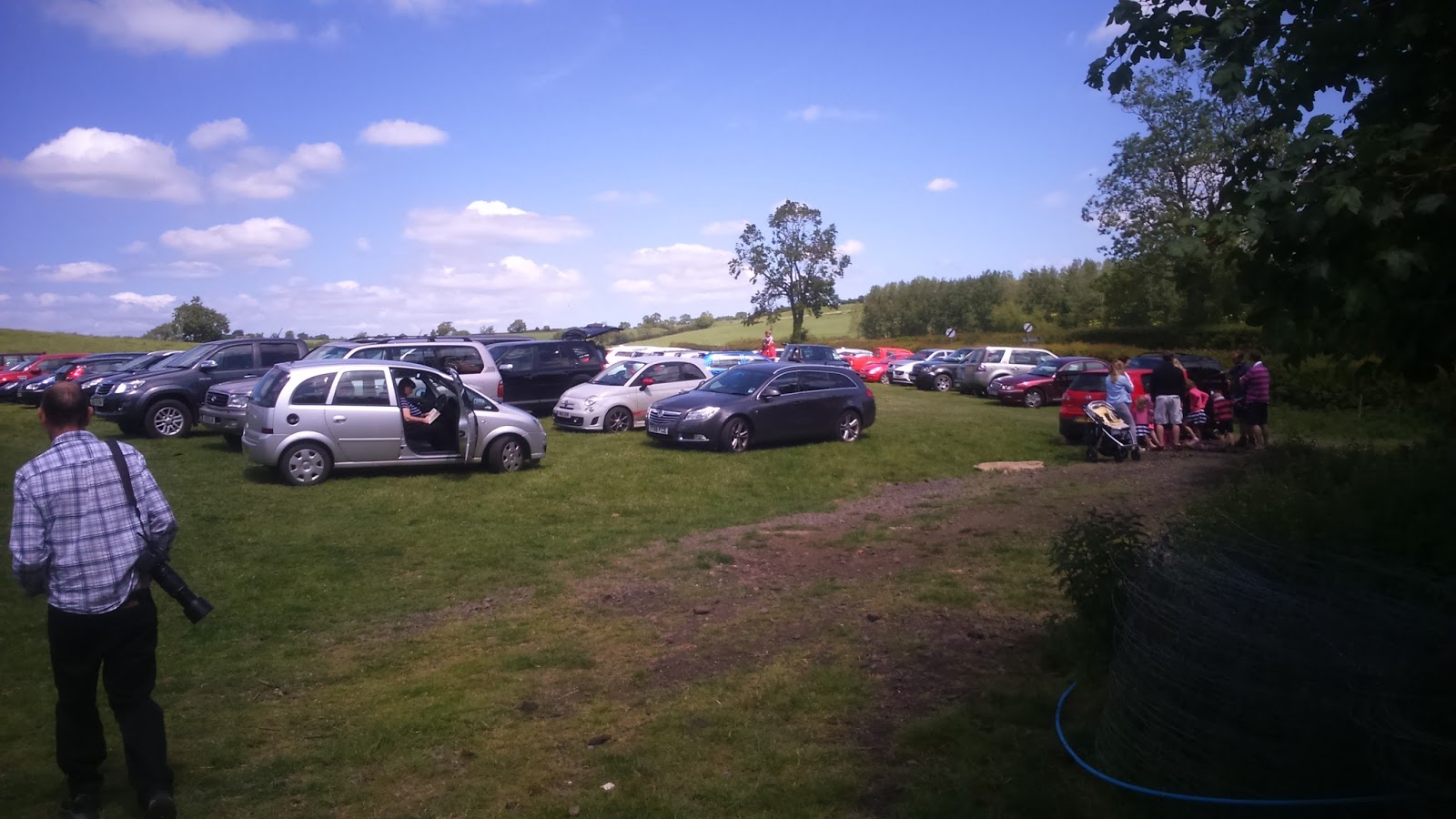
yep.. car park looking good....


Mr Kelloggs..... showing how their breakfast cereal is grown. We also had stalls selling honey, eggs, ice cream, wool and cider......all locally produced

The fire brigade turned up and got loads of new recruits all under 10 years old !!


Jim Egan explaining what we do and grow at the Allerton Project
 
 
We made 18 tractor and trailer trips around the farm...

Looking at spring oats..

....winter wheat, woodland, ponds, wild flowers and much, much more

Thanks to all the team, Richard, Dianna, Rachel, Margaret, Geoff, Arthur, Nicola, Clemmie, Ruth, Ben, Michael, Chris S , Chris N, Jim, Alastair, John, Katy, Sarah, Sofi.
Thanks to all the visitors, exhibitors and stall holders
Over and out for another year.... a date for your diary is Open Farm Sunday, 5th June 2016


Monday, 18 May 2015

Spring Time Photo Update

As they say, a picture can replace a 1000 words so here goes with another Loddington photo update.


Step 1. Take one large hedge
 
Step 2. Side up


Step 3. Lay Hedge
 
Step 4. Ditch and Fence


Step 5. Sheep in


Cover Crop drilling Aug 14
 
Cover crops over winter
 
 
Half grazed ...half sprayed off


Drilling spring oats in early April


Spring oats in mid May

 
Remove sheep and flowers grow
Pollen and Nectar in May

Wheat crop looking good as well...must wash the windows !


Saturday, 2 May 2015

Open Farm Sunday at The Allerton Project

After the great weather last year, we've got our fingers crossed for Open Farm Sunday on the 7th June 2015. Gates open at 10.00am and the event runs until 4pm. You can visit the Open Farm Sunday website for more details but we'll have all the favourites; farm animals, machinery and the tractor and trailer rides.

 There is a children's activity area and refreshments served from the visitors centre throughout the day. We've also got the fire brigade and alpacas, local produce for sale and much more.... put the date in your diary and bring some nice weather.

Farmer Phil

Here's a few pictures from last year.


Friday, 3 April 2015

2015 BFBC Results

'Well done to the GWCT team for coordinating the Big Farmland Bird Count, this is a fantastic initiative and gives farmers the opportunity to inform a wider audience about the birds they see on their farm. Hats off to Jim Egan, tireless enthusiasm on both radio and TV'   Phil Jarvis

I've reproduced the article that appears of the GWCT website... there are some great stats!!


GWCT’s second Big Farmland Bird Count took place between the 7th and 15th February 2015. Here is a summary of the results.

Participation
Over 950 farmers took part and recorded 127 species. That’s nearly twice as many farmers and an additional 11 species compared to the 2014 count.
The average farm size of those taking part was 975 acres giving a total area farmed of nearly 1,000,000 acres.

What did farmers see?
The table below shows the 25 most commonly seen species.
2015bfbcabund .fw

Blackbird, robin, blue tit, chaffinch, carrion crow, woodpigeon and pheasant were seen by over 70 % of the farmers taking part.
A total of 19 red list species were recorded with 6 appearing in the 25 most commonly seen species list – starling, fieldfare, house sparrow, yellowhammer, song thrush and skylark.
Ten species were recorded for the first time in 2015 and these included cirl bunting, Cetti’s warbler, whooper swan and lesser spotted woodpecker.
We also had sightings of twite, corn bunting, bittern and waxwing.

Table 2 below shows the actual number of each of the top 25 species seen:
2015bfbcmostcounted .fw
T
he five most abundant birds seen were woodpigeon starling, rook, fieldfare, and chaffinch. These are the same as in 2014 just in a different order.
Starlings and fieldfare were seen on over 40% of the farms taking part and were the most abundant red list species recorded in the survey.
This year seven of the top 25 most abundant species are on the Red List of Conservation concern; these are linnet, yellowhammer, house sparrow, starling, lapwing, fieldfare and redwing.
13 different species of raptors were recorded with goshawk being recorded for the first time in 2015

Who Counted?
The average farm size of those taking part was just over 975 acres.
The type of farm enterprise taking part reflected the full range farm businesses we had hoped to see.
64% of farms grew arable crops, 52% had beef or sheep and more than 12% grew field vegetables. There were also a number of dairy farms, horticulture units, poultry producers and pig producers submitting counts.
Over 69% of participants are in some form of agri-environment scheme.
Over 49% of participants were providing some form of extra seed feed for birds, either through growing wild bird seed mixes, or by providing additional grain through scatter feeding or via hoppers.
Over 50% of people who took part in 2014 completed the count again in 2015.

Where were they from?
Farmers from every county in England took part and there were responses from Ireland, Scotland and Wales.
For the second year Norfolk had the most returns with 64 farmers completing the survey and again they were closely followed by Yorkshire with 62.
Our participant from Austria took part again!

Where did they count?
The survey areas included important environmental features such as hedges, woodland ponds, grass margins, ditches and trees. This is shown in the table below:
2015bfbcwhere .fw

Most survey sites were next to winter cereals, grassland or over wintered stubbles.
Training

Over 170 people attended the ten farmland bird identification days we run during January to help people prepare of the count. These days gave people insight and the confidence to recognise individual birds on their farm with expert help provided by GWCT Advisory staff, The FWAG Association, the RSPB and Natural England.
We also produced a great ID Guide which was done in partnership with the RSPB and can be downloaded here.

What next?
The third Big Farmland Bird Count will take place during the week of 6th – 14th February 2016 and we are planning more training days for January 2016.
Thank you for taking part in the count / taking an interest in our results.